Ask ten different hiring managers what makes a good interview, and you'll get ten different answers. That inconsistency is exactly the problem.
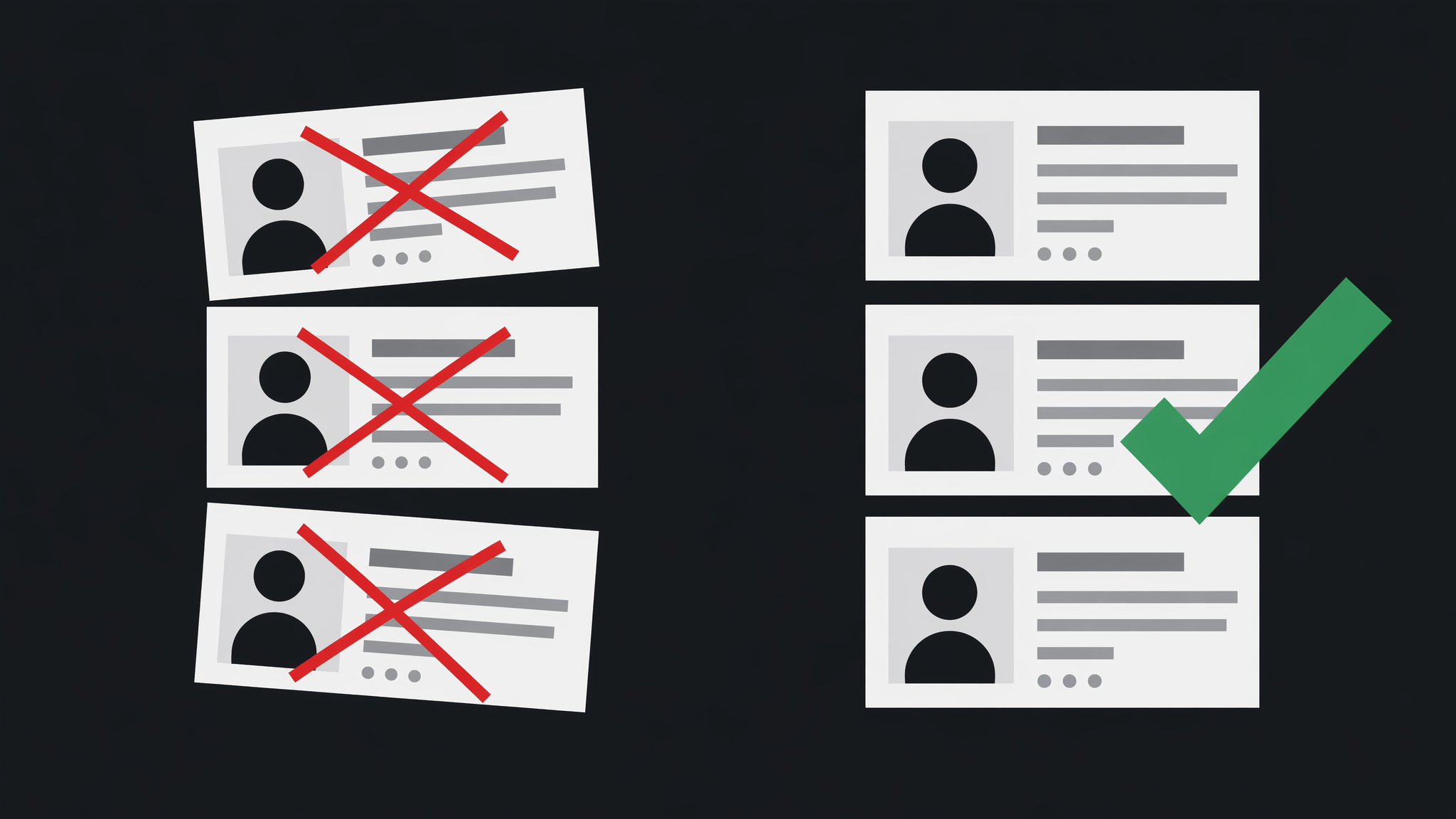
Most interviews are essentially unstructured conversations. The hiring manager asks what feels relevant. Candidates tell a polished story. Both sides leave with strong gut feelings — and a very weak signal.
What structured interviewing actually means
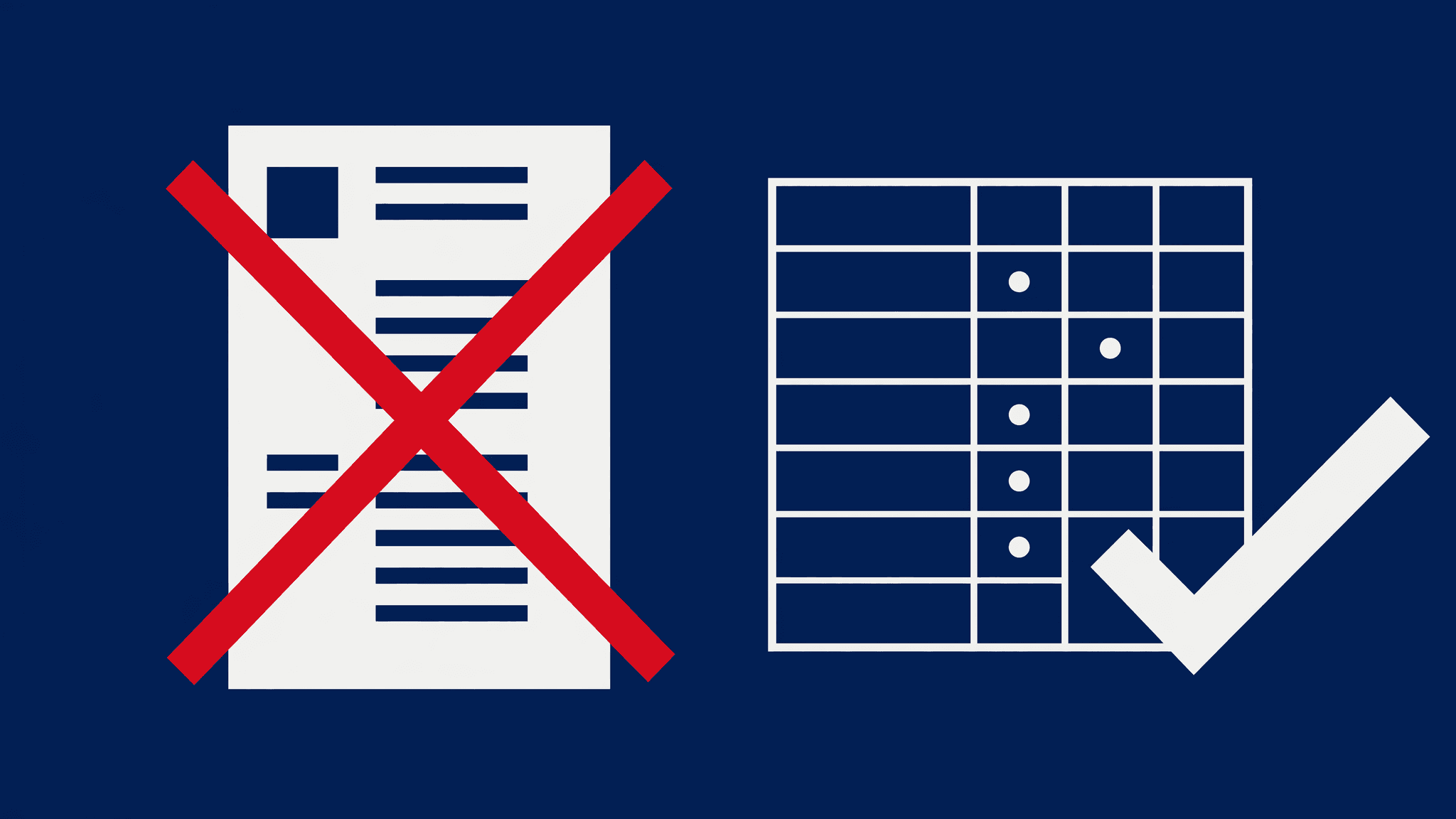
A structured interview has three properties: every candidate is asked the same questions, answers are evaluated against predefined criteria, and scores are recorded and compared systematically. That's it. It sounds obvious. It's almost never done.
The research on why this matters is unambiguous. Schmidt and Hunter's foundational meta-analysis, updated by Sackett et al. in 2022, puts structured interviews at a .42 predictive validity — meaning they correlate strongly with actual job performance. Unstructured interviews come in at around .20. The difference isn't subtle: you're roughly twice as good at predicting who will perform well when you run a structured process.
Combine structured interviews with a cognitive assessment, and you're above .60 validity. That's as good as hiring science gets.
Why most companies don't do it
Structured interviewing requires upfront work. You need to define the competencies you're hiring for, write questions that actually probe those competencies, and train interviewers to score consistently. For a team that's used to 'let's just talk and see if there's a fit,' that feels like overhead.
The other issue is that people like the illusion of intuition. Interviewers believe they're good at reading candidates. The data disagrees — humans are highly susceptible to halo effects, affinity bias, and first-impression anchoring. The more confident an interviewer feels, the less reliable their gut instinct often is.
What AI changes here
The reason structured interviewing hasn't scaled isn't that it doesn't work — it's that it's operationally hard at volume. Writing question sets for every role, calibrating interviewers, maintaining scoring rubrics: this is real work that most teams don't have bandwidth for.
AI changes the equation. At Umamy, we use AI to run structured interview sessions at scale — consistent questions, validated rubrics, instant scoring — without requiring a trained interviewer in the room for every session. The human reviews results and makes the call. The consistency and documentation come for free.
The compliance angle that's coming
From August 2026, the EU AI Act classifies AI used in hiring as high-risk, requiring documented bias audits and per-candidate audit trails. Structured interviewing isn't just better hiring — it's the foundation of a defensible, auditable process. Companies that haven't moved to structured evaluation are going to face a reckoning when they need to demonstrate their process is fair.
Start now. The upfront work is real. The payoff — better hires, faster decisions, and a process that holds up to scrutiny — is worth it.
Umamy runs AI-powered structured interviews so your team gets the science of great hiring without the operational overhead.