In 2025, applications per role doubled. Recruiter headcount dropped by more than half. Time-to-fill went up 37%. AI was supposed to fix hiring — instead, it made it slower.
Greenhouse CEO Daniel Chait gave this dynamic a name: the AI hiring doom loop. It works like this: job seekers use AI to auto-apply to hundreds of roles, employers respond by adding more AI filters, rejected candidates apply to even more jobs with even more AI, and the cycle tightens until both sides are miserable. Only 8% of job seekers believe AI screening makes hiring fairer. 70% of hiring managers trust AI to make better decisions. That gap in perception, with both sides unhappy simultaneously, is the loop in a single statistic.
Why adding more filters makes it worse
The instinct when application volume spikes is to add another screening layer. More keyword matching. A longer assessment. A stricter filter. This treats the symptom while intensifying the disease.
Every new filter is a new signal for candidates to game. Once candidates know you filter on a keyword, they add it. Once they know you use a certain assessment, they find the prep materials. The arms race escalates, the signal degrades, and your pile of 'qualified' candidates is now larger and less meaningful than before.
The structural fix: signal, not filters
Escaping the loop requires redesigning the funnel around verifiable signal rather than filterable proxies. Three moves:
1. Gate on hard facts first. Knockout questions — work authorisation, location, the one or two non-negotiable experience requirements — shrink the pile on facts you can later verify. There's nothing to optimise about a yes/no fact. This removes volume without triggering the arms race.
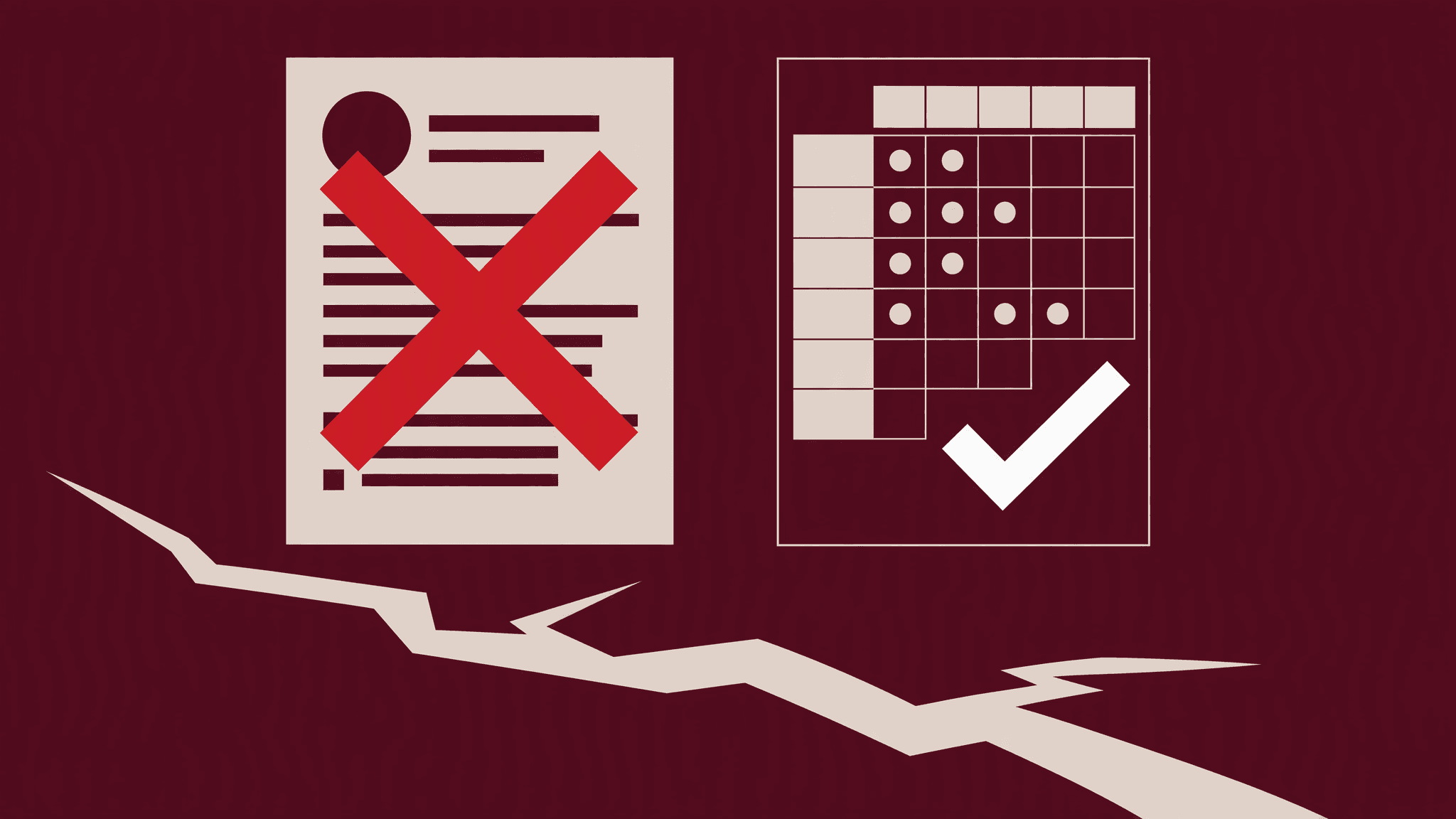
2. Advance on demonstrated work. Work samples and structured interviews evaluate what candidates can actually do, not how well they describe themselves. A realistic, scoped task tells you far more than a CV and is much harder to fake convincingly. The AI-native version: assume candidates will use AI, and evaluate how well they direct it — that's the skill the job actually requires.
3. Keep a human at every stage gate. A person, not a system, decides who advances. This is better hiring. It's also where regulation is heading: from August 2026, the EU AI Act requires human oversight and per-candidate audit trails for AI used in hiring decisions.
What Umamy does differently
Most ATS products sell a smarter filter. We're not interested in that. Umamy runs structured, AI-guided interviews that evaluate candidates on validated competencies — and surfaces results to a human who makes the call. The AI handles the consistency and scale. The human handles the judgment.
The doom loop is a process failure dressed up as a technology problem. The exit is structural — and it's available now.
Umamy helps teams escape the doom loop with structured evaluation and human-in-the-loop decisions.