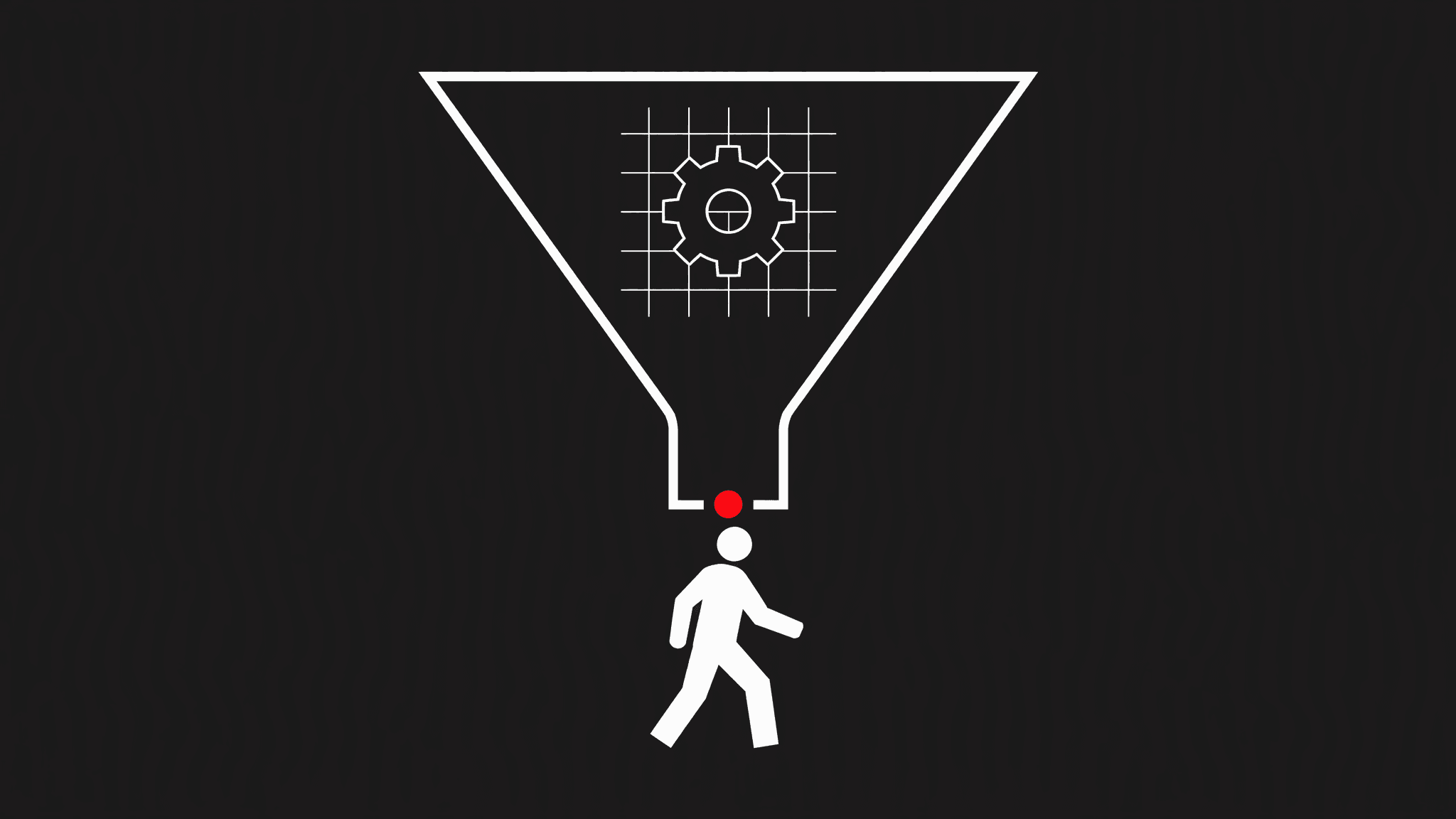
Most outreach hits people at the wrong moment
Half of employed professionals are passively open to a new role. That stat has circulated for years and it's true — but it's the wrong thing to optimize around. Being "passively open" is a permanent state for most people. It doesn't mean they'll respond to a cold message on a Tuesday.
The thing that actually predicts response is timing. A candidate who's passively open and in a transition window — a project just ended, a company just restructured, a promotion just didn't come through — is a completely different proposition from the same person six months earlier. The profile looks identical. The receptiveness is not.
The current state of most sourcing tools: they find the profile. They don't find the moment.
What signals actually indicate a transition window
Transition signals aren't uniform. They're behavioral and contextual:
- A LinkedIn profile updated after 18 months of silence
- A job title that changed without a company change (reorg, role shift)
- A company that just announced layoffs, a leadership change, or a funding round that resets the cap table
- A skill block updated to include something the current role doesn't use
- A pattern of conference attendance or publishing that clusters around an external profile-building phase
None of these is a smoking gun. All of them together shift the probability that someone is more open than their default state. That's what AI-driven sourcing can pick up at scale — not "this person wants a job," but "this person's context changed and the window is open."
Volume sourcing treats every passive candidate as equally reachable. Signal-based sourcing concentrates outreach on the subset where the timing is actually right. The difference in response rate is not marginal.
The spam problem is a targeting problem
Candidate inboxes are worse than they were three years ago. AI made high-volume outreach cheap, so everyone does it, so response rates dropped, so people send more volume, so the inbox gets worse. The doom loop of recruiter outreach.
Personalization at scale fixes the message but not the targeting. A well-written message to someone who isn't in a transition window is still noise — just more articulate noise. They'll remember the outreach as spam regardless of how thoughtful the first line was.
The actual fix is sending fewer messages to more precisely identified people. That requires signal-based filtering that most sourcing tools don't do: they optimize for finding the right profile, not the right moment.
How Umamy approaches passive sourcing
Umamy doesn't just match profiles to job criteria. It layers behavioral and contextual signals to surface candidates whose window is currently open.
When a candidate appears in Umamy, the recruiter can see which signals triggered the recommendation. Not "they have 7 years of experience in B2B SaaS" — that's searchable. The context that's less obvious: their employer just went through a Series B that typically resets roles for early employees; they updated their profile for the first time in two years; their current title changed three months ago without a company change.
That's not a guarantee of receptiveness. It's a probability shift — and it's the difference between a 3% response rate and a 15% one.
The recruiter still makes the call on who to reach out to and how. The AI narrows the field to people where that call is worth making right now.
What this means for outreach quality
When you're sending fewer, better-targeted messages, the message itself can actually reflect what you know. You're not sending a template blast hoping something sticks. You're reaching out to someone because something specific about their current situation makes this role relevant to them, this week.
That's a different conversation from the start. And it's the only kind of outreach that passive candidates — who are employed, busy, and receiving a lot of recruiter messages — will actually read past the subject line.
Finding passive talent isn't about having access to the largest database. It's about identifying who's actually in a position to listen. That's a timing problem. Solving it with volume is the recruiter doom loop. Solving it with signal is the alternative.
📅 Fewer messages, sent by the right person. Umamy's outreach goes out from your hiring manager's own LinkedIn, after your approval. 1 in 2 people reply (11,010 people messaged).
Talk to sales