
The HR Stack of a European Scale-Up in 2026
A clear map of the HR tool ecosystem for scale-ups — what each layer does, where the real overlaps are, and how AI is reshaping the connections.
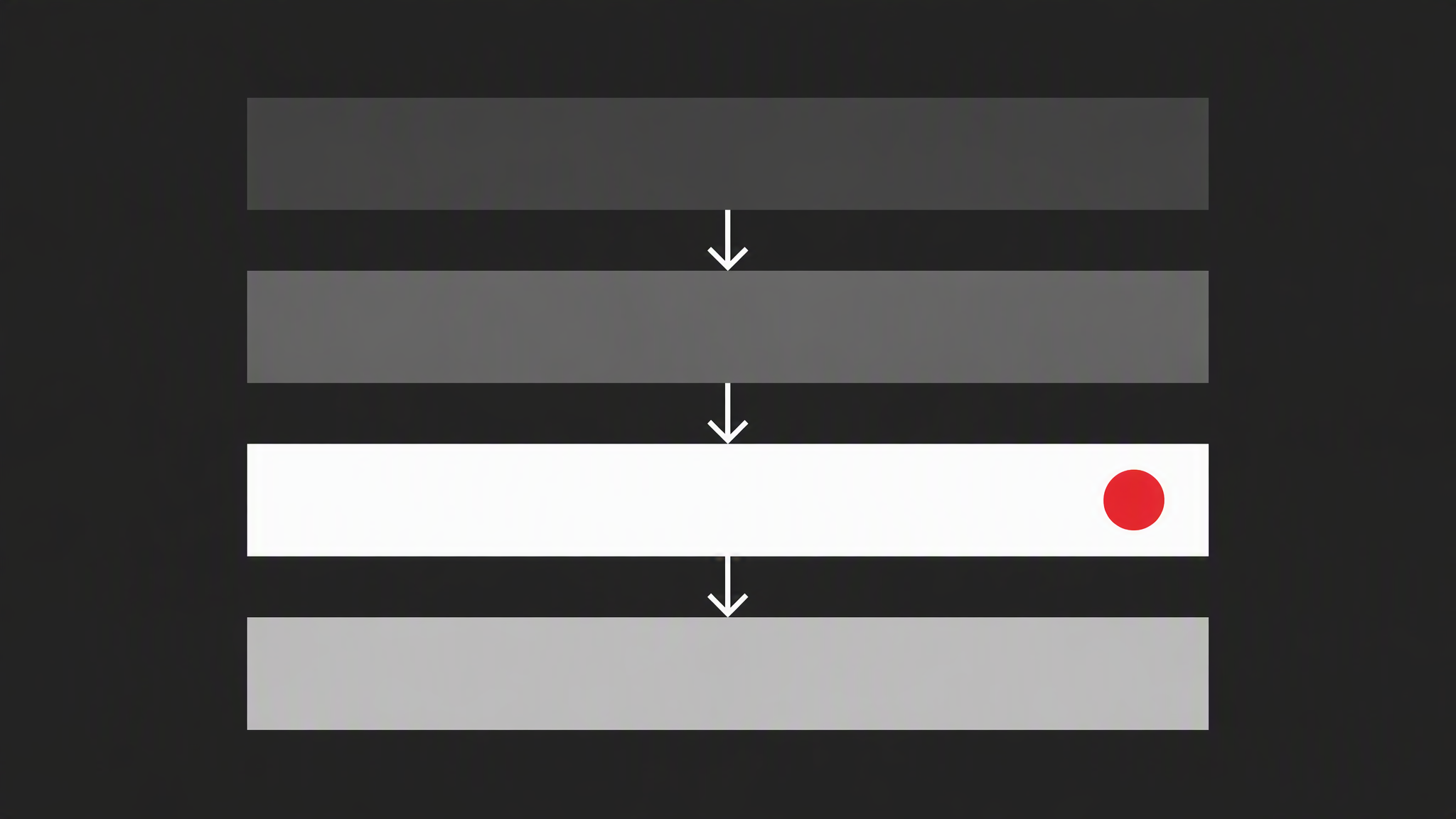
Most scale-ups do not have an HR strategy problem. They have an HR tooling confusion problem.
By the time a company reaches 100 people, it typically has four to six HR tools running in parallel, none of which were chosen as a system. The ATS was picked when you made your first 10 hires. The HRIS came when payroll got complicated. The sourcing tool was a sales hire's idea. The onboarding tool was a pandemic purchase. They do not talk to each other, and nobody has a clear picture of where a candidate ends and an employee begins.
This is not a rant about tool sprawl. It is a map. Here is what each layer of the HR stack actually does in 2026, where the real overlaps are, and how AI is changing the connections between them.
The four layers
Layer 1 — Sourcing and attracting
This is the top of the funnel: job boards, employer brand, LinkedIn, sourcing platforms. The job here is to generate a pipeline of people who might want to work with you.
Key tools: LinkedIn Talent Solutions, Welcome to the Jungle (employer brand + job board), Indeed, specialized job boards by vertical or role type.
What is changing: AI sourcing tools — including Umamy — are starting to do what a good sourcin recruiter does manually: identify profiles that match a role's real requirements rather than its keyword list, and reach out at the right moment. The output is a pre-qualified pipeline delivered to the ATS, not a raw dump of profiles.
Layer 2 — Pipeline and process (ATS)
The ATS is the operational core. It structures the hiring process: job openings, application stages, scorecards, offers. Every recruiter touches it every day.
Key tools: Greenhouse, Ashby, Workable, Lever, Flatchr (France), Teamtailor, SmartRecruiters, Deel ATS, Manatal, Welcome to the Jungle ATS. Full breakdown →
What is changing: The ATS used to be a passive record-keeper. It is becoming an active workflow engine — automated stage transitions, AI-generated interview prep, real-time pipeline analytics. The MCP layer (see below) is what makes this composable with the rest of your AI environment.
Layer 3 — People and organization (HRIS)
The HRIS is the system of record for the employee lifecycle: onboarding, payroll, time off, org charts, performance. The ATS hands off a hired candidate; the HRIS takes them in.
Key tools: Lucca, PayFit (France-native), HiBob, Personio, BambooHR, Factorial, Workday, SAP SuccessFactors. Full breakdown →
What is changing: HRIS data is becoming AI-queryable. "How many engineers do we have in Paris vs. Berlin?" used to require an HR manager with a spreadsheet. With an HRIS that exposes an MCP server — HiBob today, Workday shortly — it is a 10-second question in Claude or ChatGPT.
Layer 4 — Intelligence and scoring
This is the layer that sits between sourcing and the ATS, or between the ATS and the hiring decision. It evaluates candidates against the role's real requirements, surfaces signal from unstructured data (resumes, interviews, assessments), and helps hiring managers make better decisions faster.
This is where Umamy sits. Not as an ATS replacement, but as the scoring layer that plugs into whichever ATS you already use — reading the pipeline, enriching it with structured signals, and making that data available wherever your team works, including through its MCP server.
Where the real integration problems are
In theory, these four layers work together. In practice, the handoffs break in three specific places.
1. Sourcing → ATS: Profiles from LinkedIn or sourcing tools land in the ATS with inconsistent data quality. Some have enriched profiles; most do not. The AI sourcing layer solves this by standardizing the signal before it enters the ATS.
2. ATS → scoring: The ATS collects interview feedback, but most teams do not structure it well. Scorecards exist but are inconsistently filled. Interview notes are unstructured text. The scoring layer parses all of this and produces something comparable across candidates.
3. ATS → HRIS: The hire/no-hire decision lives in the ATS. The employee record lives in the HRIS. Between them: a manual handoff, usually a copy-paste into an onboarding form. This is the integration most vendors claim to have solved and most companies still do manually.
The AI connectivity question
In 2026, the question is no longer "does your HR tool have AI?" The question is: can the AI work across your whole stack?
An AI assistant that can only answer questions about your ATS in the ATS UI is not that useful. One that can pull candidate data from your ATS, cross-reference it against headcount targets from your HRIS, and draft a board update — that is useful.
This is the premise behind MCP in HR. A growing set of tools — Ashby, Workable, Greenhouse, HiBob, Umamy — now expose native MCP servers. An AI client connected to all of them can orchestrate across the full stack in plain language. We cover the state of MCP in HR tools in detail in the next piece →.
What a well-designed HR stack actually looks like
For a European scale-up between 50 and 300 people, the functional stack usually looks like this:
- Sourcing: LinkedIn + a targeted job board + Umamy for AI-assisted pipeline quality
- ATS: Ashby (tech-forward) or Workable (speed-first) or Flatchr (France-first)
- HRIS: HiBob (international growth) or Lucca/PayFit (France-first)
- Scoring / intelligence: Umamy, feeding structured data back into the ATS
The number of tools is not the problem. The connections between them are. In 2026, those connections are finally getting standardized — not through more integrations, but through AI that can span all of them at once.